

Puli
The Puli is an ancient Hungarian herding breed of Asian origin. Its original ancestors almost certainly came to the Carpathian Basin with migrating nomads – the ancient Hungarians, who made their living by raising cattle.
The Puli is a dog with a lively temperament, extremely docile. It loves children and is an excellent guard. Its current form has adapted it to sporting use.

Pumi
The Pumi originated in Hungary in the 17th and 18th centuries by crossing a primitive Puli with imported German and French terrier-type dogs with pricked ears. It was recognized as a separate breed at the beginning of the 20th century.
This rather lively herding dog has a restless temperament. Extremely courageous, somewhat suspicious of strangers. With its reasonable behavior, liveliness and expressiveness, it attracts attention always and everywhere. The Pumi is quite noisy. Its whole appearance embodies a thirst for action, and due to its restlessness and activity, all parts of its body are constantly in motion. It is always active and ready for work. Shy or phlegmatic behavior is uncharacteristic of the breed.

Mudi
The breed originated during 18th to 19th century by crossing Hungarian sheepdogs, most likely with various German sheepdogs.
The Mudi is extremely docile, with a lively temperament, courageous, alert, eager to work, alert and adaptable. Due to their courageous disposition, they are very popular among shepherds for herding large and heavy livestock. They are even used for driving wild boar. Excellent guard and companion dogs. Watchdog. Affectionate family pets. Due to their relatively short coat and excellent adaptability, they can also be kept indoors.
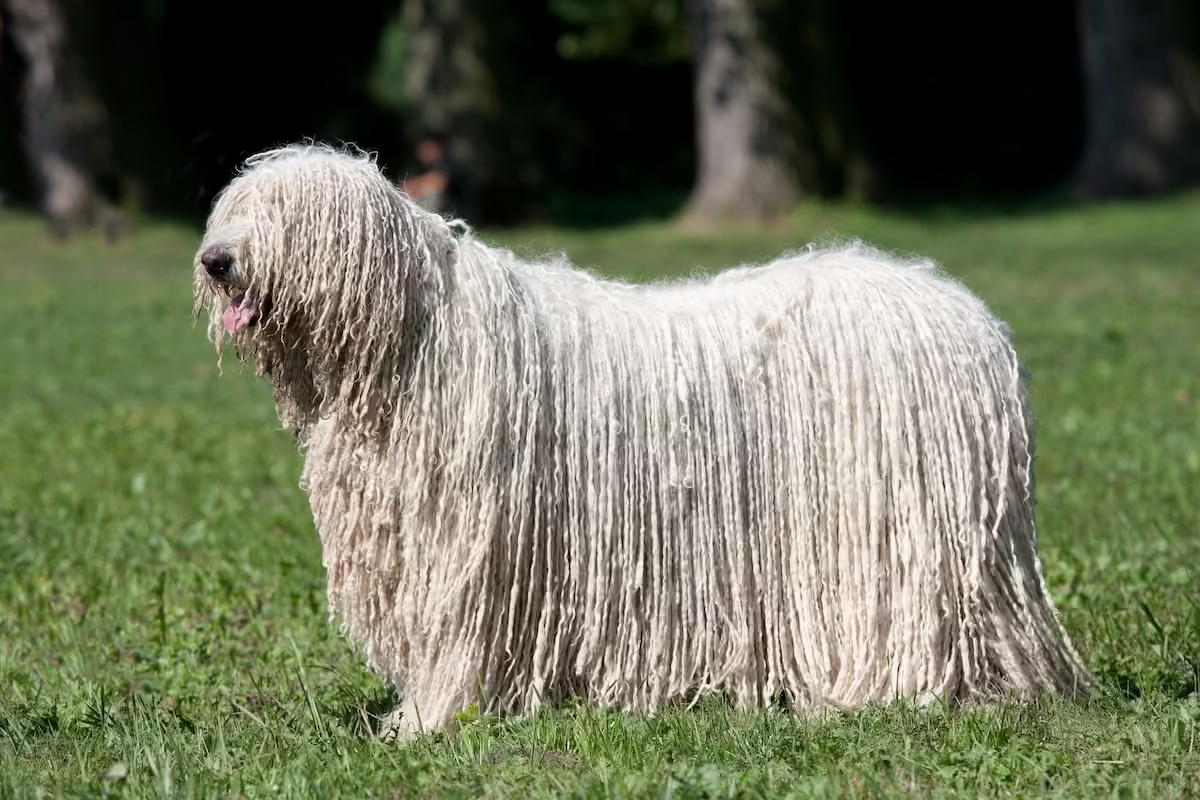
Komondor
The Komondor is an old Hungarian herding breed of Asian origin. Its original ancestors almost certainly came to the Carpathian Basin with migrating nomads – the ancient Hungarians, who made their living by herding cattle.
It has unwavering courage in guarding and defending the flocks entrusted to it and the property and home of its master. It attacks silently and persistently. It considers its territory its property and will not tolerate any other living creature on it. It has a suspicious nature. During the day it likes to lie down, which allows it to control its area. At night it is constantly on the move.

Kuvasz
The Kuvasz is a long-established, ancient Hungarian herding dog. Its ancestors came to the Carpathian Basin during the Hungarian occupation. These dogs were needed to watch over and guard their flocks from wild beasts and thieves. Due to its hunting instinct, the Kuvasz was the preferred hunting dog during the time of King Matthias Corvinus. Since the decline of herding, it has been used much less for its original duties and has settled in villages and later in cities.
The Kuvasz is courageous and fearless. It protects the people entrusted to its care and their property with its life. It is self-confident and can be aggressive if mistreated. It is loyal, reliable and loves its owner and its surroundings. It needs a lot of exercise and must be kept busy. It is undemanding. It is easy to care for and can withstand very difficult weather conditions. It appreciates every love and care given to it.